Three takeaways from Ta-Nehisi Coates’ Interview in Paris
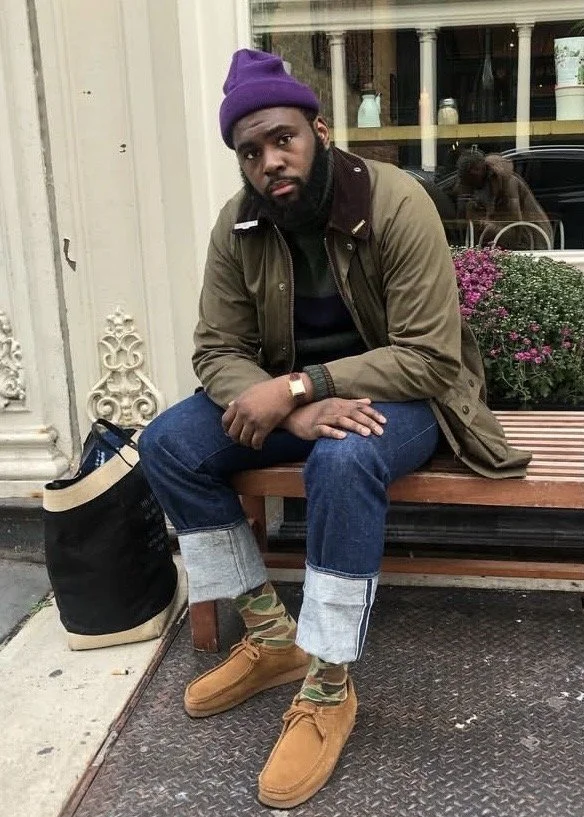
Kyle Norville is a writer and educator whose work blends literature, history, and social justice with a global lens. Splitting his time between Brooklyn and Paris, he examines culture and identity in all their complexity. Beyond writing, Kyle teaches English literature and creates curricula inspired by poetry, hip-hop, and creative expression. A longtime admirer of Ta-Nehisi Coates, Kyle attended Coates’ recent event in Paris and offers his three biggest takeaways from the conversation.
Your ability to write, your ability to read, all stems from the process of sacrifice by the ancestors before you. It is a part of your lineage and heritage, and as a result, we must be responsible.
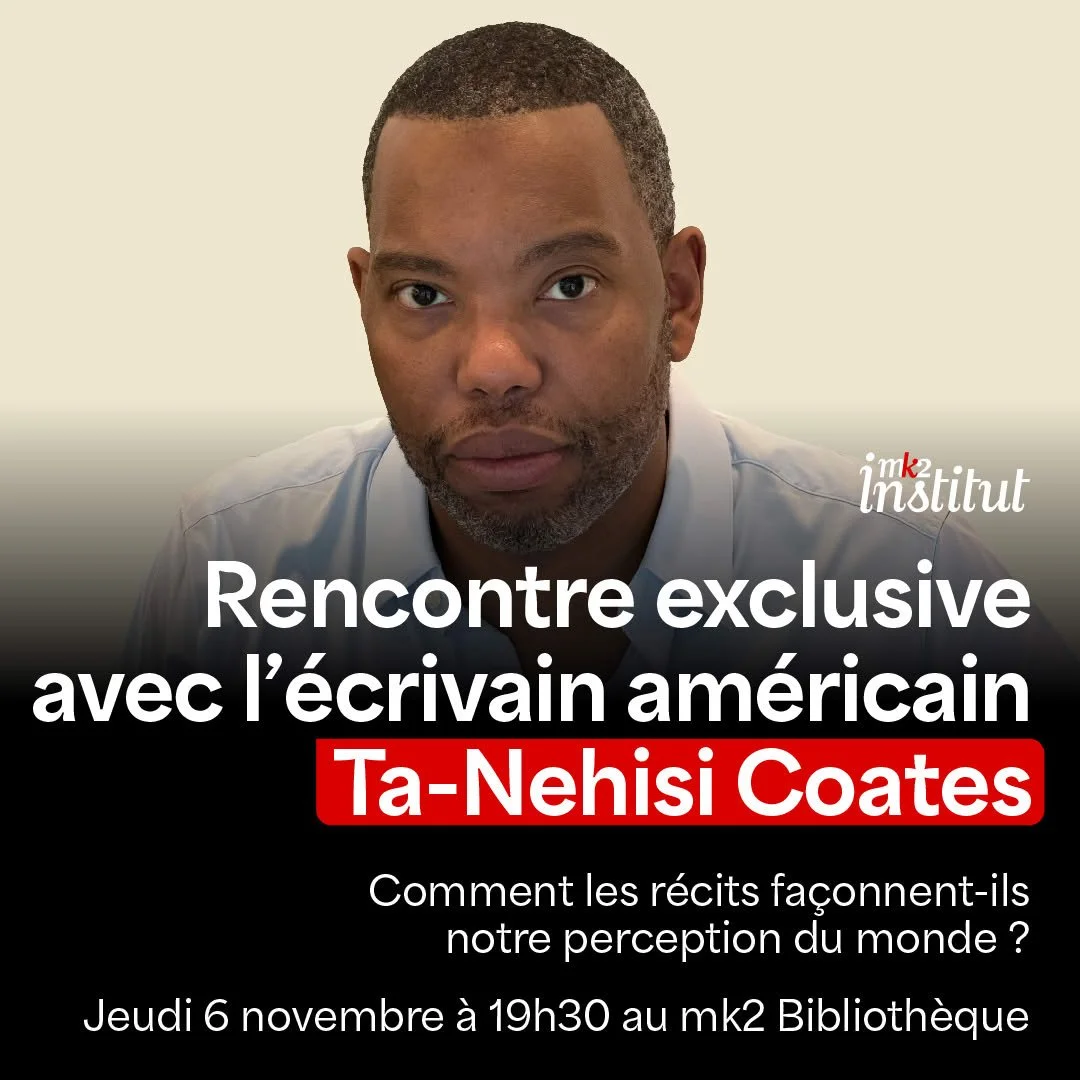
This was one of the first ideas Ta-Nehisi Coates shared during his November 6th interview at MK2 Bibliothèque in Paris, France’s 13th Arrondissement. Coates was promoting his latest book, The Message, released in the U.S. on October 1, 2024, and recently translated into French. Following the discussion, attendees had the opportunity to purchase the French edition and have it signed.
A diverse audience filled the theatre, eager to engage with the experiences, concerns, and concepts that shaped Coates’ text. He reflected on his own biases, the experience of having some of his books banned in parts of the U.S.—which he noted only increased their readership—and his profound disappointment regarding the international silence on the atrocities in Palestine, which he witnessed firsthand during his travels in the West Bank. As an educator, this discussion left me deeply motivated. Here are three key takeaways that highlight why The Message is both timely and transformative.
1.Writing always comes with a price.
Coates discussed historical Black writers like Frederick Douglass, who toured the U.S. promoting his autobiography at great personal risk, and Ida B. Wells, who faced death threats for documenting lynchings in Memphis. He emphasized that African-American writers have historically risked their lives simply for telling the truth.
He connected this history to contemporary experiences, explaining that the U.S. systematically attempted to take away two key freedoms from Black people: the right to bear arms and the right to read and write. Writing, Coates argued, should haunt the writer—it should challenge and weigh on your thoughts.
Most importantly, he speaks to how his visits to Senegal and Palestine have also haunted him and still haunts him to this day. In one regard, because he is grappling with the Western ideology of how Africa is depicted by Hollywood ( poor, uncivilized and uncultured- which are absolute lies) and how a trip to Africa is less of a vacation for African-Americans, and more of a direct confrontation with the ideals you were conscious or sub-consciously raised with. The other regard, calls into question fellow journalist and their silence on what is currently happening in Palestine.
2. People are complicated, as are communities
Coates explains that within the American framework— and arguably the global one—there are essentially two opposing ways of seeing the world. His worldview is rooted in the belief that all humans are equal and deserve to live with dignity, and that universal values matter. In contrast, he argues that the other side desires a fundamentally different world, one in which equality is neither a priority nor a shared value. You cannot convince those committed to inequality that everyone deserves humanity; as a result, dialogue becomes impossible. “We are enemies,” he states plainly. He recalled an incident when his books were banned in South Carolina. Yet when he visited, parents despite ideological differences, stood united in the belief that institutions should not ban books. For Coates, the other side seeks to rule through ignorance, while his side insists on reading widely, trusting that when the smoke clears, truth will stand on its own. His attention is on the “middle group” that has not chosen a side yet, because they remain open to truth. He also notes that the reaction of one’s enemies often validates a book’s importance. This theme resonated as he described how America was built: the extermination of Native Americans for their land, and the exploitation of African-Americans to cultivate that land. He emphasized how America often justifies its treatment of people because it does not want to be named a thief, nor acknowledged as a villain, despite a long history marked by violence, theft, and exploitation. He expanded on this complexity by recounting his trip to Palestine and the stark contrasts he witnessed: one side with almost no access to water, the other with such abundance that they had swimming pools. He spoke about how hostage taking operated as policy, and how the government could arrest Palestinians without cause—an experience that echoes with Black Americans, and more broadly with anyone aware of ICE practices in the U.S. today. He expressed confusion that fellow journalists ; well-traveled, award-winning, and deeply respected ; could report on global injustices yet overlook the very clear injustices in Palestine, which even his parents could immediately recognize as wrong.
3. The African-American Lens vs. The African Lens
Coates described a conversation with an African friend who voiced frustration over how Africa is often portrayed, noting that its story is frequently told through a Black American or African-American lens. Her central question was: how can people who were never born or raised on the continent claim ownership of its narrative? He acknowledged the complexity of this critique, explaining that Black America lives under the shadow of Africa because Black America is, in many ways, a construction of it. This history shaped the justification for slavery, Jim Crow laws, segregation, and lynching. African-Americans were viewed as lesser, framed through the same distorted lens used to misrepresent Africa. Yet, despite generations of displacement, African-Americans have never fully separated from Africa. Coates argues that Black Americans remain tethered to the continent. They create art rooted in African traditions ; such as the connection between griots and the origins of hip-hop ; while also developing entirely new traditions that may confuse Africans, such as Kwanzaa or the practice of African-American parents giving their children African names like “Ta-Nehisi.” These acts push back against the White American, media-driven myth of Africa, a myth built to justify centuries of oppression. He then explored the power of Black art. Jazz and blues, for example, were targeted for suppression, yet could not be erased because the art carries its own gravitational pull—magnetic, undeniable, and honest. Black Americans have nothing to hide; their collective experience is one of plunder, theft, and exploitation. Despite persistent efforts to uphold white supremacy, America cannot claim its artistic identity without the influence of Black creativity. He referenced the 1970s after being asked about Black leaders, noting that many of them were fierce supporters of Pan-Africanism—a movement American institutions actively tried to dismantle. He emphasized that during this era, Black leaders consistently spoke not only about Africa, but also about Palestine, underscoring the longstanding tradition of global solidarity within Black political thought.
There were many aspects of this discussion that could be highlighted and analyzed, and in many cases were after the time elapsed. But one thing that was very clear, is we need to absolutely speak to atrocity. Speak to history and understand that people have literally given up their lives for us to read, write and even open our mouths to advocate for ourselves and others. In a world that has a high amount of social media apps but people who have steadily declining literacy rates, we must count the cost of what we are prepared to fight for, who we are consenting to be and how to prepare future generations on how they view the world and their placement in it. As an Educator, I carry this responsibility with me in my classroom and understand the brevity and significance but also understand, the beauty in being able to shape those that will come after me.

Kyle Norville