
I recently had the pleasure of attending the talk In the Black Fantastic in Rotterdam, hosted by Ekow Eshun and Ellen Gallagher. In the Black Fantastic was one of my favorite exhibitions last year. I was fortunate enough to experience it in London, at the incredible Hayward Gallery. The exhibition brought together works that explore the mythical and the speculative, presenting a broader cultural movement—one that imagines other worlds emerging from the everyday realities of Black life. That said, I have to admit I struggled with the title, especially the word “fantastic.” I found myself questioning what it was meant to evoke. Was it referencing fantasy as a genre, almost like a fictional escape? Or was it being used as a synonym for excellence? Both interpretations left me slightly unsettled and unsure of how to position the exhibition.


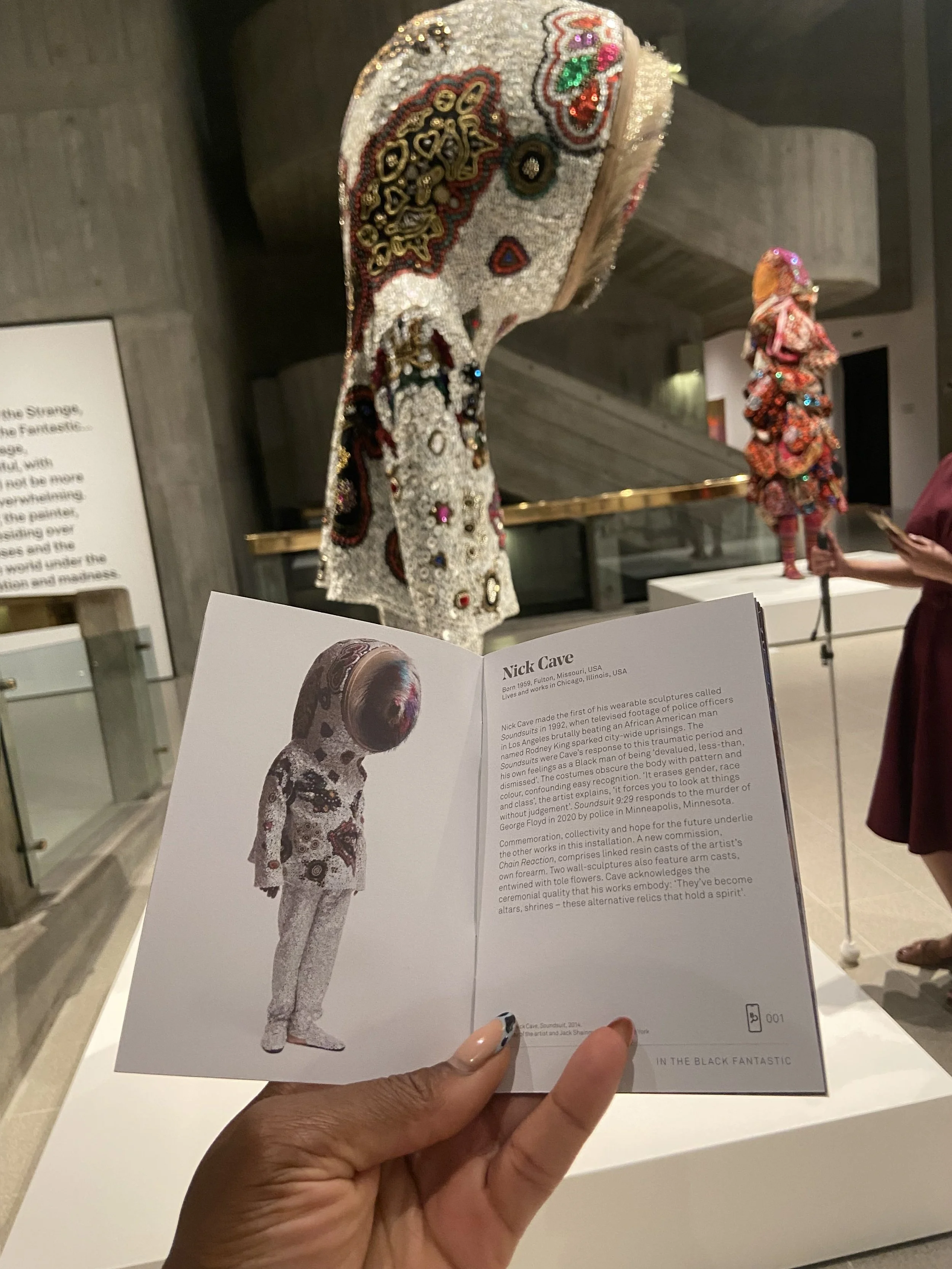
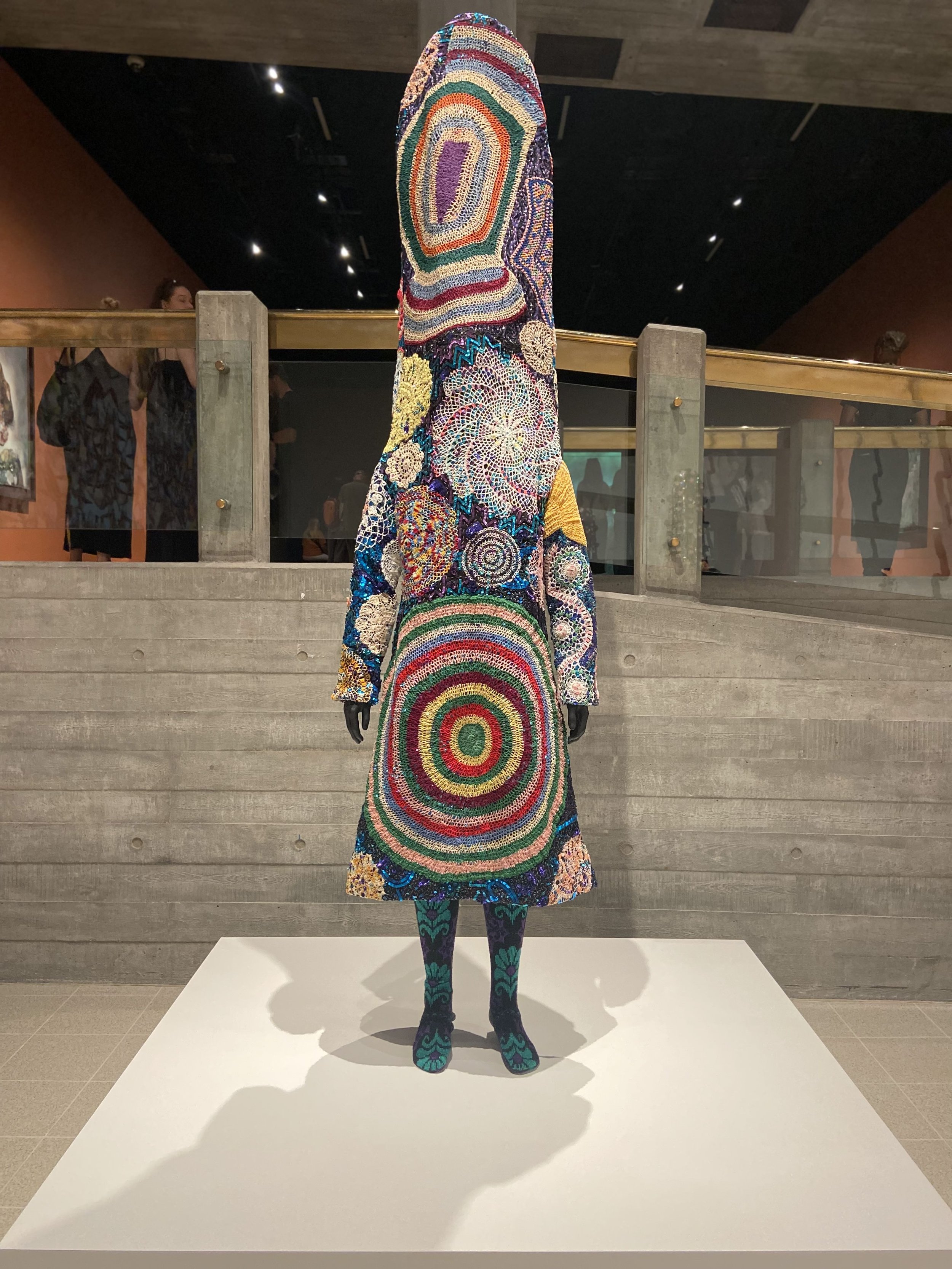
The idea of meritocracy, often reinforced through the language of “excellence,” is deeply problematic. As we know, success is rarely determined solely by talent or effort, but far more by access to wealth and social position.
In that sense, “excellence” can feel less like an objective measure and more like a label selectively granted to Black people and people of color who conform to dominant often white norms. It tends to reward those who do not disrupt the status quo, those who are perceived as non-threatening, and those who are, in a way, validated by systems that were never built for them in the first place.At the same time, those who are not recognized, empowered, or legitimized through this label can internalize that exclusion. The frustration economic, social, and political doesn’t always get directed at the structures that produce it, but instead turns inward or against their own communities. This can manifest in very real ways: low self-esteem, impostor syndrome, and broader mental health struggles that disproportionately affect marginalized groups.
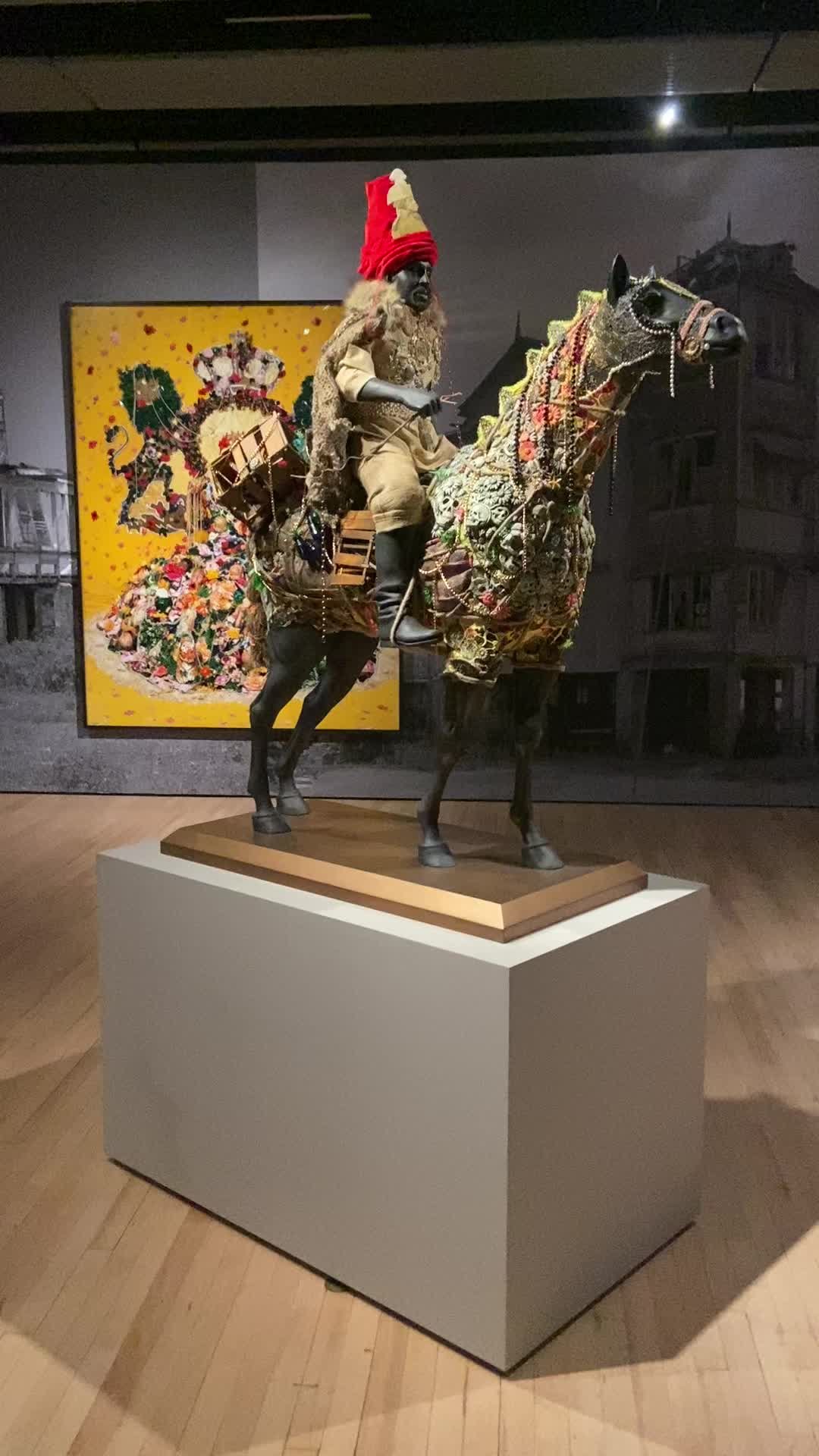
Excellence has often been positioned as the price of our humanity — as if we must be exceptional to be seen as worthy.
"Why is it that Black people always feel the need to be excellent?"
"Why can’t we simply exist, just as we are?"
– Slim, Queen & Slim, directed by Melina Matsoukas
What's even more disturbing to me is the feeling that these exhibitions, possibly due to their location, always seem to stem from a passionate desire to prove something to the empire. "Look at us, we can do it too. Look at us, we have talent too." Lately, a fundamental question has been on my mind: Who can access and own Black art?
Black art has become a trending topic in recent years, driven by white guilt and the "Black Lives Matter" movement. As a result, prices have risen, making Black artwork unaffordable for a young collector like myself. I interpret this as a new method for the empire to keep wealth out of reach and inaccessible to Black individuals, while also satisfying its primal urge to appropriate Black culture.
Do you recall that scene in M. Night Shyamalan's "Unbreakable"? In the movie, Elijah (played by Samuel L. Jackson) owns a comic book gallery filled with original drawings, and a businessman (M. Night Shyamalan) enters to purchase his art. Elijah explains how the artwork holds significant importance in the legacy of comics.
"IT'S A CLASSIC REPRESENTATION OF GOOD VERSUS EVIL. NOTICE THE SQUARE JAW OF THE SLAYER, COMMON TO MOST COMIC BOOK HEROES. AND THE SLIGHTLY DISPROPORTIONATE SIZE OF THE JAGUARO'S BODY COMPARED TO HIS HEAD. AGAIN, THIS IS COMMON, BUT ONLY IN VILLAINS... THE THING TO NOTICE ABOUT THIS PIECE... THE THING THAT MAKES IT VERY, VERY SPECIAL... IS THE REALISTIC REPRESENTATION OF ITS CHARACTERS. WHEN THE CHARACTERS WERE FINALLY PUBLISHED IN THE MAGAZINE, THEY WERE EXAGGERATED... AS IT ALWAYS HAPPENS."
The businessman proceeds to purchase the artwork, and Elijah goes to the back of his store to prepare the package. As he overhears the businessman say, "My child is going to be very happy," Elijah stops, turns around, and nervously starts asking questions about the businessman's child. "How old is your child?" he inquires. The businessman replies, "Four years old."
Elijah strongly shakes his head and rejects the sale of the artwork. How can a four-year-old understand the subtlety, complexity, and importance of this art? This is precisely how I feel when I see white people acquiring our artwork. I struggle to comprehend how Black art could find a comfortable place in the living rooms, homes, or offices of white individuals .
