Book Review: The Vanishing Half by Brit Bennett
A haunting meditation on identity, inheritance, and the ache of becoming
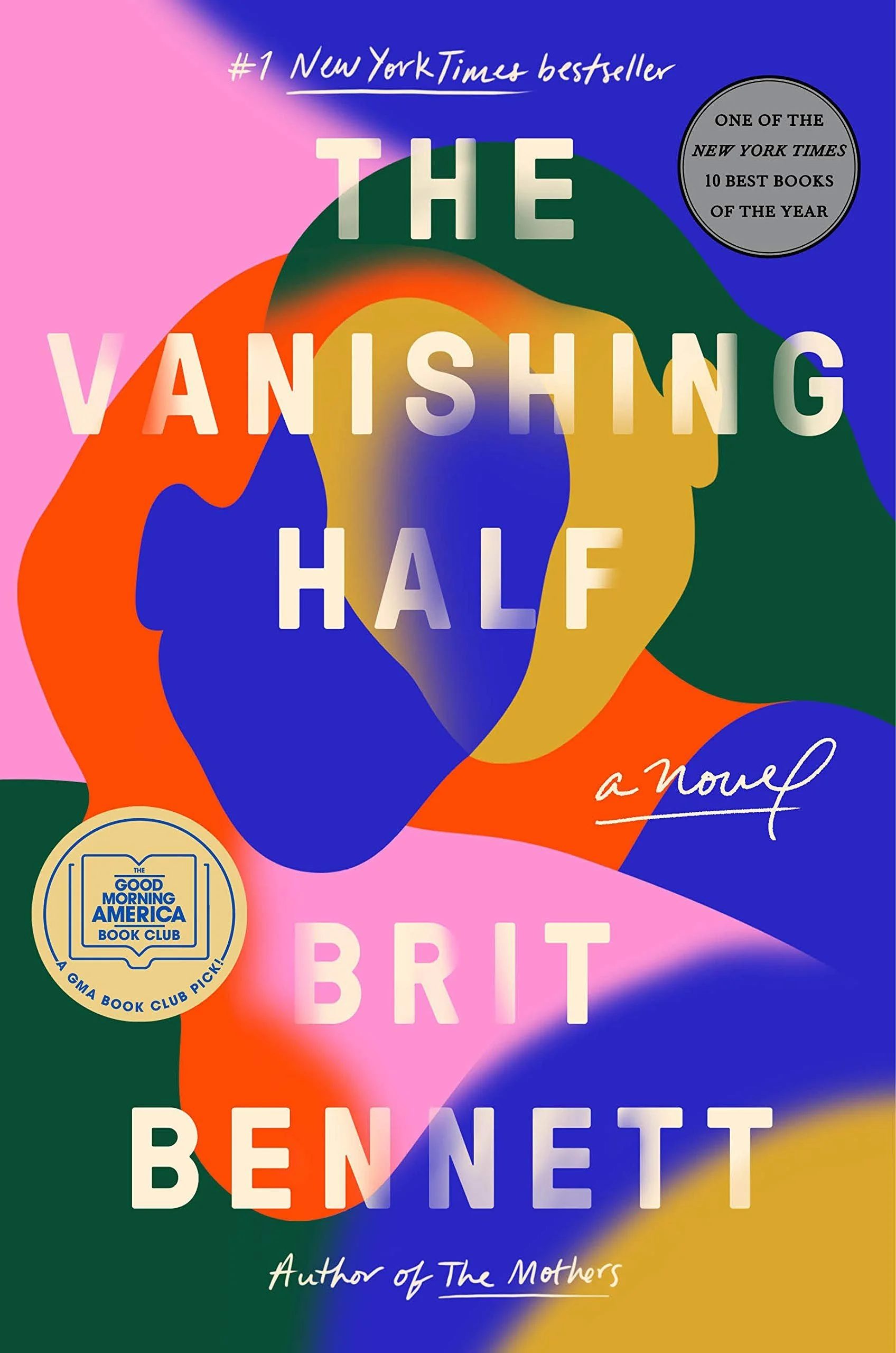
Brit Bennett’s The Vanishing Half is really a story built on quiet tension between sisters, between who you are and who you choose to be, between being seen and disappearing. It’s set in mid-20th-century America, but it doesn’t just focus on passing as white in a literal sense. It’s more about what passing actually costs what parts of yourself you have to hide, shrink, or completely erase just to survive in a world that’s so rigid about race, gender, and belonging. At the center are the Vignes twins, Desiree and Stella, who grow up in Mallard, this Black town obsessed with lightness. When Stella decides to pass as white, it’s not just a fresh start it’s a complete break. She cuts herself off from everything she knew. And even though she manages to leave physically, the novel makes it clear that you can’t really outrun your past your identity, your memories, they follow you.
What I liked is how Bennett handles race it’s very direct but not heavy-handed. Whiteness isn’t presented as something natural, but as something you perform, something you maintain through silence and playing along. It turns identity into this kind of daily act, where survival depends on whether people believe you. And over time, that performance starts to wear on you. The book also really gets into colorism, but not in a theoretical way it shows how it actually shapes people’s lives, their relationships, their sense of safety. There are these small moments where that pressure lifts a bit, where people can just exist without being judged by their skin tone, and those moments feel rare but important.
There’s also a strong feeling of loneliness throughout the book. Almost every character is dealing with what they had to give up to become who they are. Reinventing yourself isn’t freeing in the way you might expect it’s exhausting, and it can be really isolating. The spaces they move into aren’t really made for them, so even when things seem “normal,” there’s always that underlying disconnect. But at the same time, the book has a lot of tenderness. It keeps coming back to love and the need to belong, like what really matters isn’t being unique but being truly seen and understood. You see that in Desiree, but also in Jude and Reese, who are both trying to figure out who they are outside of what they’ve been given.
Mallard itself becomes a powerful symbol of caste and community, a place that replicates the same exclusionary structures it was built to escape. Within it exists a hierarchy so rigid that
even those marginalized by the outside world create their own boundaries, their own “in-between” spaces for those who never fully belong anywhere. Bennett captures this irony with remarkable restraint.Perhaps the most devastating aspect of The Vanishing Half is its understanding of loss not sudden loss, but chosen loss. The kind that comes from deciding that loving nothing is the safest way to stay hidden. Detachment becomes a survival strategy, even as it hollows the characters from within.
The Vanishing Half is a quietly powerful novel with careful prose and emotional precision, Brit Bennett examines how race, identity, and memory shape not only how others see us, but how we come to see ourselves. It reminds us that reinvention is never free, and that every act of becoming leaves something behind. It feels timeless in its concerns, grounded in the past while speaking directly to the present and warning us, gently but firmly, about the future.
