Sandie Dubois: A Personal Journey Through Fashion
JOURNALIST BASED IN PARIS

THE READERS
I first crossed paths with Sandie over 15 years ago during my time as a stylist/journalist. Our encounter may have been during our tenure at Grazia, although memories from that period are somewhat hazy. Still, what stood out about Sandie was her expertise in fashion, culture, and music. She embodied the quintessential French beauty with her blonde locks, flawless skin, and a penchant for the occasional cigarette. With expertise and experience acquired in independent magazines such as Grazia, Stylist, Vanity Fair, Elle, Les Inrocks, Nylon USA and currently, she is author and director of episodes for "Gymnastique" (la Blogothèque) and "Le Dessous des Images" on Arte.
She's a rare gem in my circle—a white woman who truly grasps the challenges faced by black women in both the fashion industry and the world at large. While the term "ally" has been tossed around lately, I've always felt, even if I've never explicitly said it, that she embodies true allyship. She's the only white woman I know who, if we were to grab coffee in our neighborhood, I wouldn't feel the need to adjust my speech or behavior to fit into societal norms.
-
Description I started journalism 18 years ago, at the beginning of social media and blogs. So, I've always had this dual print and web culture. With the evolution of new practices, it's interesting to see how we can adapt to formats, even though for now, it seems a bit repetitive: I'm really waiting for the downfall of Instagram and the standardization that followed.
The culture of imagery for imagery's sake has run its course: it brought some interesting things, notably a certain creativity race, but today, especially in the age of AI, we know that simple images without context are futile, even harmful as they can be easily manipulated.
However, I love the expertise of content creators on TikTok: I always feel like I'm learning something, whether it's about Tabi shoes price with incredible storytelling, marketing analysis of a red carpet event, or a hot-off-the-runway fashion show review.
Nevertheless, I'm convinced that blogs will make a comeback very soon. We've exhausted the content for likes; what will make the difference now is analysis, creativity, and above all, personality.goes here

-
When I started in journalism and women's magazines back then, people of color were very rare. Editorial staff were mostly white and Parisian, creating a toxic environment of exclusivity. Things began to change with the early days of fashion influencers (bloggers at the time), blogs, and then social media: the end of a hierarchy, of a held system.
Everyone could express themselves, showcase their skills, create new formats... Talents emerged, and the press had to reassess itself to stay in the game.
We see it: black culture is constantly plundered, designers or stylists are rarely credited...
Fortunately, we can sense progress, even if the main reason is that brands are afraid of facing a shitstorm and being canceled. There is still so much work to be done.
How do you see the intersection between fashion, culture, and social advocacy, and how has your role as a journalist allowed you to amplify marginalized voices within these realms? The Blackletter focuses on celebrating the black community and providing a safe space for sharing stories and experiences. How do you envision the fashion industry contributing to such spaces of inclusivity and empowerment?
The major media outlets always had (and have) more resources, but their influence is now on the ground. For journalists, in-depth work is important: being meticulous about credits, historical research, not being lazy, and seeking to meet new personalities. But above all, allowing voices to be heard.
However, the real problem lies elsewhere: the press is dying, and spaces for giving voice are increasingly limited. This concerns me a lot.
Fortunately, independent initiatives are multiplying. I believe there is nothing to expect from powerful media or the fashion industry. Everything happens through branching out, on the ground, by occupying all networks, real or virtual. It is then that major institutions come to seek talents and spread ideas on a larger scale. But all the groundwork is done on the field, just like in the associative sector.
BOOKS RECOMMENDATIONS :
"First of all, 'Parable of the Sower' by the late American Octavia Butler. Apart from among sci-fi fans, her work is relatively unknown in France; nevertheless, she is one of the pioneers of the Afrofuturist movement. In addition to being a captivating novelist, she explores themes such as slavery, ecology, and inequality... I highly recommend it.
Next, the work of Albertine Sarrazin, particularly her most famous novel, 'Astragal', released in 1965. Born in Algeria, Albertine Sarrazin was adopted by a harsh French couple when she was a child, thus having to leave her country. A wrenching experience that marked the beginning of a chaotic life, between prison, fervor, and rebellion. Her autobiographical books raise diverse societal questions such as adoption (and its failure here), the departure from Algeria, the silencing of incest victims, feminism, or bisexuality.
“Anguille sous roche” by the Comorian writer Ali Zamir (published by Le Tripode). It tells the story of a woman on the verge of drowning in the Indian Ocean, revisiting her thoughts in a final surge of life. The novel consists of a single, long, and magnificent sentence. A tour de force.
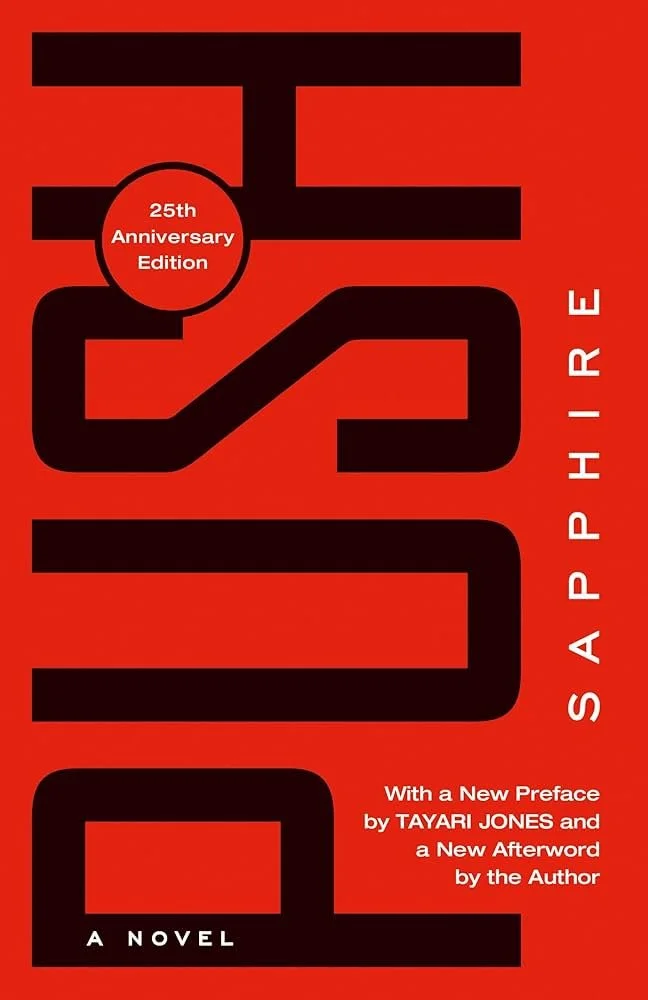
And finally, I remember the shock I had when reading Sapphire's 'Push' when I was a teenager. The story is a real trigger, but in its own way, the work on style, language, narrates more the character's evolution than the events themselves, somewhat akin to Jack London's 'Martin Eden.' I liked this approach: managing language proficiency as a means of empowerment."