
Zadie Smith’s Swing Time and the Search for Identity
Book Review: Zadie Smith’s Swing Time
By Kyle Leon Norville
“Yeah, ducked a lot of spiteful moves
I was a angry yute while I was writin’ Views
Saw a side of myself that I just never knew
I’ll probably self-destruct if I ever lose, but I never do…”
Drake- “Do Not Disturb”
The quarter-life crisis is a moment in time where you realize nobody is coming to save you. The feeling overwhelms you like a packed elevator during rush hour. Breathing feels like a truth or dare game and you sit in silence trying to wake your voice up like the ice cream truck is coming down the block. I can only speak for myself when I had my 25 year old quarter-life crisis. I had to really process my identity and who I wanted to be. It was a chilling realization that I didn’t like the man I was becoming. Didn’t understand where I was going or what I wanted to do. But it was necessary in order to determine my steps and the directions I wished to take.
I figured it out and I knew then that I would figure it out.
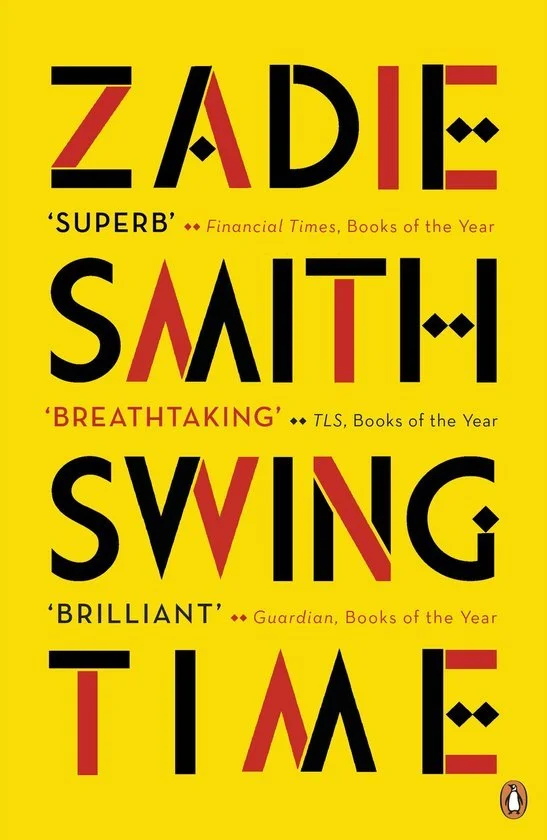
Fast-forward to now, reading Zadie Smith’s 2016 Novel, Swing Time, and reading about the same journey of self that she depicts through the lens of the main character( whose name I is purposely left elusive), and her navigation on who she is through her various life stages and relationships.
Smith does a superb job of painting this picture of the main character through flashbacks and sections, each important to the development of our main character.
The main setting takes place primarily in 1970s London and transitions to New York and West Africa, where we see our narrator go through instances that seemingly build her world-view, many of them primarily occurring through her friendship with Tracey, whose checkered childhood has a profound effect on the way our narrator sees herself, as her on and off again friend, while a superb dancer and strong-willed girl, deals with a complicated household, one the narrator shares, as both children are bi-racial and deal with various stages of parenting, ( neglect, divorce, death and abuse to name a few).
What makes this book so compelling, is the flawed nature of our narrator, who in her naivety, places herself in situations that will make the reader question her decisions, which is absolutely the way a parent would act for their child. The interesting aspects are how the narrator does not break from these aspects, but we witness a development into the way she adapts to her situations. We learn the narrator is not a good dancer, where Tracey was the star. But while Tracey could move, our main character had a talent for singing, later purchasing a 1936 musical with the title ‘Swing Time,’ starring Fred Astaire and Ginger Rogers. We see how music and dance play as motifs throughout the book as it is a passion shared by the narrator and Tracey, though only one has pursued the art form, while the other ends up in various places in life, trying and failing to secure her identity.
Where Smith shines is in the way she depicts the moments her character navigates through tough situations. We feel the character begin to slowly unravel into understanding that her situations are all a part of her journey. That her identity, and the people she finds connection with, no longer hold the same value as she grows. We see it in most of her interactions with her parents, we see it with the way she speaks of Tracey. She, throughout the novel, is tethered to others hopes and dreams, but rarely does she go out to accomplish her own. It speaks to the questions one may have with happiness or finding enjoyment in the way they are living their life, as the narrator feels very much stuck in this question, with no true answer to the question.
I think Smith is saying that it is ok to be stuck, it is ok to find value in the small things, that your experiences can shape you, but life also allows you the space to navigate through these moments. The characters in the novel are all flawed, hopelessly searching for something to provide fulfillment, but the central character does not have this search, she merely lives in the moment, jealous for those who have accomplished what they are looking for, resentful for those who still strive, and sad for those who have failed to reach their accomplishments.
But isn’t that the most hopeful thing? That you can attempt your accomplishments, and have various results, but you can also still be on a journey of understanding self. Smith presents a commentary on choice, and how happiness can be found in not making a choice at all. The 25 year old me feels at ease at the conclusion of this novel, as it speaks to that fear of satisfaction and provides a blanket comfort in the idea of not knowing what’s next. But knowing that, much like the narrator, you will survive and most importantly, you can be happy

